
team awarded

Data Intelligence Platform

UX Design, Design Systems, Leadership

_

2019

Nanda Dias Design

© 2026

Nanda Dias Design

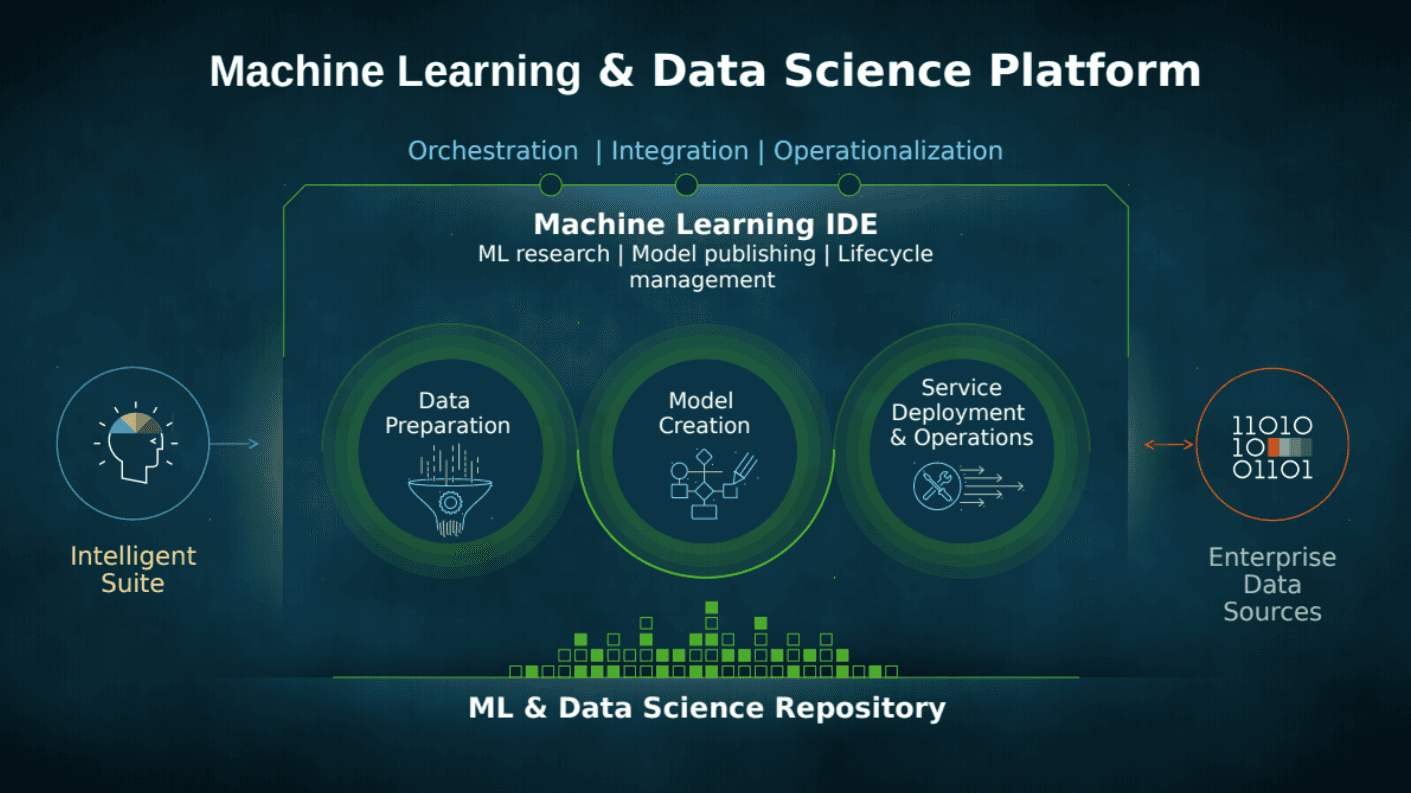
Data Intelligence Platform for SAP's Machine Learning Foundation

Data Intelligence Platform for SAP's Machine Learning Foundation

Ten teams, seven cities, three frameworks, and a style guide everyone technically followed. I found that better guidelines were not the fix, documented reasoning was.

My Role & Strategic Approach

SAP leadership wanted to stop shipping scattered machine learning tools and start shipping one integrated platform, seamless end to end. I joined the Machine Learning Foundation in January 2019 as UX Lead for that consolidation, responsible for consistency across roughly ten engineering teams in seven cities (Berlin, Walldorf, Dublin, Tel Aviv, Singapore, Palo Alto, Bangalore), building on three different frameworks: SAPUI5, Angular and Aurelia. SAP's Fiori guidelines existed, but they were broad enough to interpret ten different ways, which is functionally the same as not having them.


Decisions and Actions


  • Built a design system from scratch, referencing Fiori 3.0, with the reasoning behind each decision written down next to it, not just the rule. That written reasoning is what let designers and developers who had never met decide things the same way.

  • Ran design critiques across the platform's teams, naming the inconsistent UI and interaction patterns, then experimented with reducing how many critiques were even needed, since a written single source of truth answers most of what a critique exists to catch.

  • Got product owners to agree to validate features ahead of the development cycle, in an organisation where testing before building was not yet the norm and most engineers had never had a UX designer on their team at all.

  • Recruited consultants closest to our Beta customers for early interviews, specifically because they could surface real pain points faster and cheaper than a full formal research cycle, then ran task-based feedback sessions with the data scientists and ML engineers actually building on the platform.

The System That Actually Got Used

The design system lived in Sketch for designers and InVision's Design System Manager for developers and product managers to browse, so nobody had to ask a designer what a component was for. Every entry carried the decision and the reason behind it, which is what actually mattered: teams stopped guessing at what Fiori 3.0 intended and started checking a single answer instead.


That shift changed the relationship, not just the output. Reviews got faster because designs arrived closer to the system already. Rework dropped for the same reason. And trust built across seven time zones in a way that a shared document alone would not have done, because the document was answering "why", not just "what".

My Role & Strategic Approach

SAP leadership wanted to stop shipping scattered machine learning tools and start shipping one integrated platform, seamless end to end. I joined the Machine Learning Foundation in January 2019 as UX Lead for that consolidation, responsible for consistency across roughly ten engineering teams in seven cities (Berlin, Walldorf, Dublin, Tel Aviv, Singapore, Palo Alto, Bangalore), building on three different frameworks: SAPUI5, Angular and Aurelia. SAP's Fiori guidelines existed, but they were broad enough to interpret ten different ways, which is functionally the same as not having them.


Decisions and Actions


  • Built a design system from scratch, referencing Fiori 3.0, with the reasoning behind each decision written down next to it, not just the rule. That written reasoning is what let designers and developers who had never met decide things the same way.

  • Ran design critiques across the platform's teams, naming the inconsistent UI and interaction patterns, then experimented with reducing how many critiques were even needed, since a written single source of truth answers most of what a critique exists to catch.

  • Got product owners to agree to validate features ahead of the development cycle, in an organisation where testing before building was not yet the norm and most engineers had never had a UX designer on their team at all.

  • Recruited consultants closest to our Beta customers for early interviews, specifically because they could surface real pain points faster and cheaper than a full formal research cycle, then ran task-based feedback sessions with the data scientists and ML engineers actually building on the platform.

The System That Actually Got Used

The design system lived in Sketch for designers and InVision's Design System Manager for developers and product managers to browse, so nobody had to ask a designer what a component was for. Every entry carried the decision and the reason behind it, which is what actually mattered: teams stopped guessing at what Fiori 3.0 intended and started checking a single answer instead.


That shift changed the relationship, not just the output. Reviews got faster because designs arrived closer to the system already. Rework dropped for the same reason. And trust built across seven time zones in a way that a shared document alone would not have done, because the document was answering "why", not just "what".

What I'd Do Differently

Getting buy-in to validate before building took longer than building the design system itself, because "test it first" read to some engineers as an extra step rather than a way to avoid rework. In hindsight, I would have led with the speed argument from day one rather than the completeness argument: the whole point of recruiting consultants closest to our Beta customers was that their feedback was fast and cheap, and that is a stronger opening line than "we need to validate this properly".


What I would keep exactly as it was: the written reasoning. Rules people can ignore under deadline pressure. Reasoning they have actually seen is harder to argue past, even from seven time zones away.

Outcomes

10 Teams, 7 Cities

One SAPUI5, Angular and Aurelia design system, replacing scattered tooling with a single integrated platform experience.

20 Research Sessions

5 consultant interviews surfaced what Beta customers were actually struggling with, then 15 task-based sessions with data scientists and ML engineers turned that into a prioritised backlog.

(02)

© 2026

(02)

more works

(03)

(Frequently Asked Questions)

What does complex, large-enterprise B2B SaaS experience actually give me, and would I still move fast enough for a smaller team?

How do I work when the brief isn't clear yet, and what part of the job do I enjoy most?

How do I actually strengthen a team, and will I get hands-on or mostly direct from a distance?

What did I do with the time between roles, and where do I actually stand on AI in my day-to-day work?

How has living abroad shaped me, and am I looking for something long-term, or a bridge while I sort out next steps?

(03)

(Frequently Asked Questions)

What does complex, large-enterprise B2B SaaS experience actually give me, and would I still move fast enough for a smaller team?

How do I work when the brief isn't clear yet, and what part of the job do I enjoy most?

How do I actually strengthen a team, and will I get hands-on or mostly direct from a distance?

What did I do with the time between roles, and where do I actually stand on AI in my day-to-day work?

How has living abroad shaped me, and am I looking for something long-term, or a bridge while I sort out next steps?

(03)

(Frequently Asked Questions)

What does complex, large-enterprise B2B SaaS experience actually give me, and would I still move fast enough for a smaller team?

How do I work when the brief isn't clear yet, and what part of the job do I enjoy most?

How do I actually strengthen a team, and will I get hands-on or mostly direct from a distance?

What did I do with the time between roles, and where do I actually stand on AI in my day-to-day work?

How has living abroad shaped me, and am I looking for something long-term, or a bridge while I sort out next steps?