AI Reporting Sustainability
UX Design, AI, Leadership
_
As Product Design Lead on AI-powered sustainability reporting within SAP’s Sustainability Control Tower, I ran design and engineering in parallel and tested a deliberately minimal first version on real customers’ live data. That approach avoided a significant rework cost and accelerated delivery.
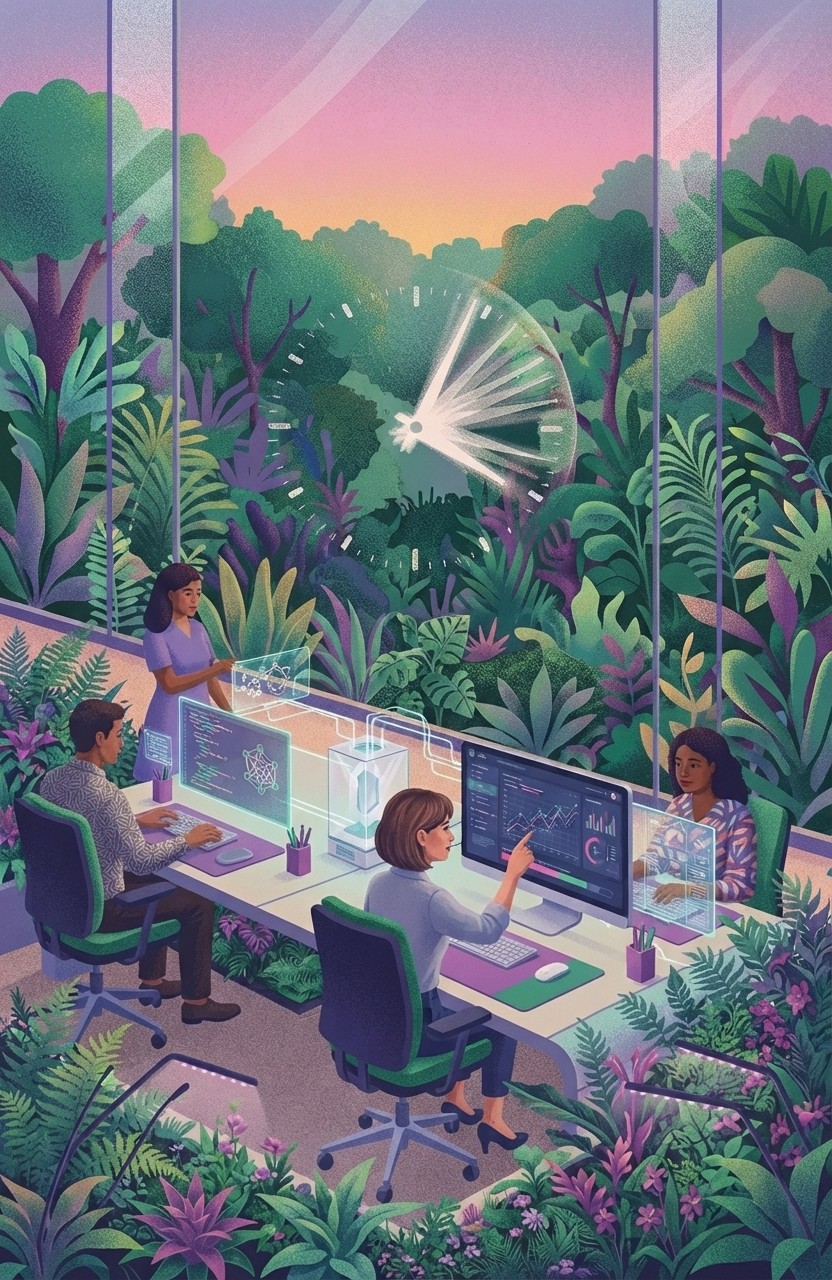


Design Iterations & Learnings
Bet one: ship something we knew was incomplete. Assumption mapping ranked what we were least certain about, and we scoped the first version to almost nothing: a search input, a single action, one generic report template. Testing it on real production data surfaced four failures we had not predicted:
System feedback was too opaque for anyone to trust the AI was working, fixed with real-time status messaging.
Error states exposed raw technical codes instead of guidance, rewritten in plain language.
The report format was rigid enough to push people off-platform to edit, so we broke the static report into editable modular sections.
Nothing distinguished AI-generated content from the user's own data, which in an audit context is not a polish problem, so we added visual indicators for AI-generated content.
Catching all of it at low fidelity, before the harder infrastructure existed, avoided a substantial amount of rework.
Bet two: spend the time that bought on the expensive thing. With the core experience validated, we invested in structured multi-stakeholder workflows, the sort of feature that is brutal to unwind if it sits on unproven assumptions. Service blueprinting across several lines of business, always including C-level and Sustainability stakeholders, made cross-team handoffs visible before we built them. Validation also showed that a report's sections belonged to different areas of expertise, so each expert reviewed only their own part. The result: configurable report structures, role-based editing, automated handoff notifications, and a single in-product source of truth.
Reflections
We brought our internal AI-ethics team in from day one. Their core rule: no AI-generated content reached a document without human review first, so one named expert always owned what got signed off, not the AI unsupervised in front of an auditor. The per-section review and approval trail from Bet two is what made that enforceable in practice: AI-generated content never reached anyone outside the process, an external auditor or a colleague not involved in making the report, without a named expert signing off on it first. Many people working in sustainability are conscious of AI's own environmental footprint and sceptical of products that add AI as a feature rather than a genuine value driver, so we held ourselves to justifying the AI by the value it created rather than by its presence. The early signal was roughly a 10x reduction in the estimated hours to produce a report. I left the team before that could be validated at scale, so I treat it as a strong early signal and not a proven figure.
The lesson I'd carry into the next one: describe this kind of decision by what it buys, not by what it tests. I framed the incomplete-first-version call internally as testing assumptions before building, which invited the reading that design was the brake. Calling it what it actually was, buying back the time for one throwaway version, would have met far less resistance, and it was the more accurate description of what happened.
What held throughout both bets, and mattered more than either number, was customer trust. It went up, not down, meeting our leadership's most valued point from the start.
Praised by SAP's CTO Dr. Philipp Herzig, I was recognised as a key contributor to this high-stakes release.
SAP Sustainability Control Tower is live, and some details stay under NDA. What's shown here is everything I can share publicly. I'm always happy to talk through more of my work on a call.


Image generated with AI using Google Nano Banana
Evolving as a team
testimonials

Questions people usually ask
Expand all


(01)
Vellfire Calibration
Art Direction
What does complex, large-enterprise B2B SaaS experience actually give me, and would I still move fast enough for a smaller team?
How do I work when the brief isn't clear yet, and what part of the job do I enjoy most?
How do I actually strengthen a team, and will I get hands-on or mostly direct from a distance?
What did I do with the time between roles, where do I stand on AI, and what am I looking for next?
How has living abroad shaped me, both as a person and as a principal design lead?